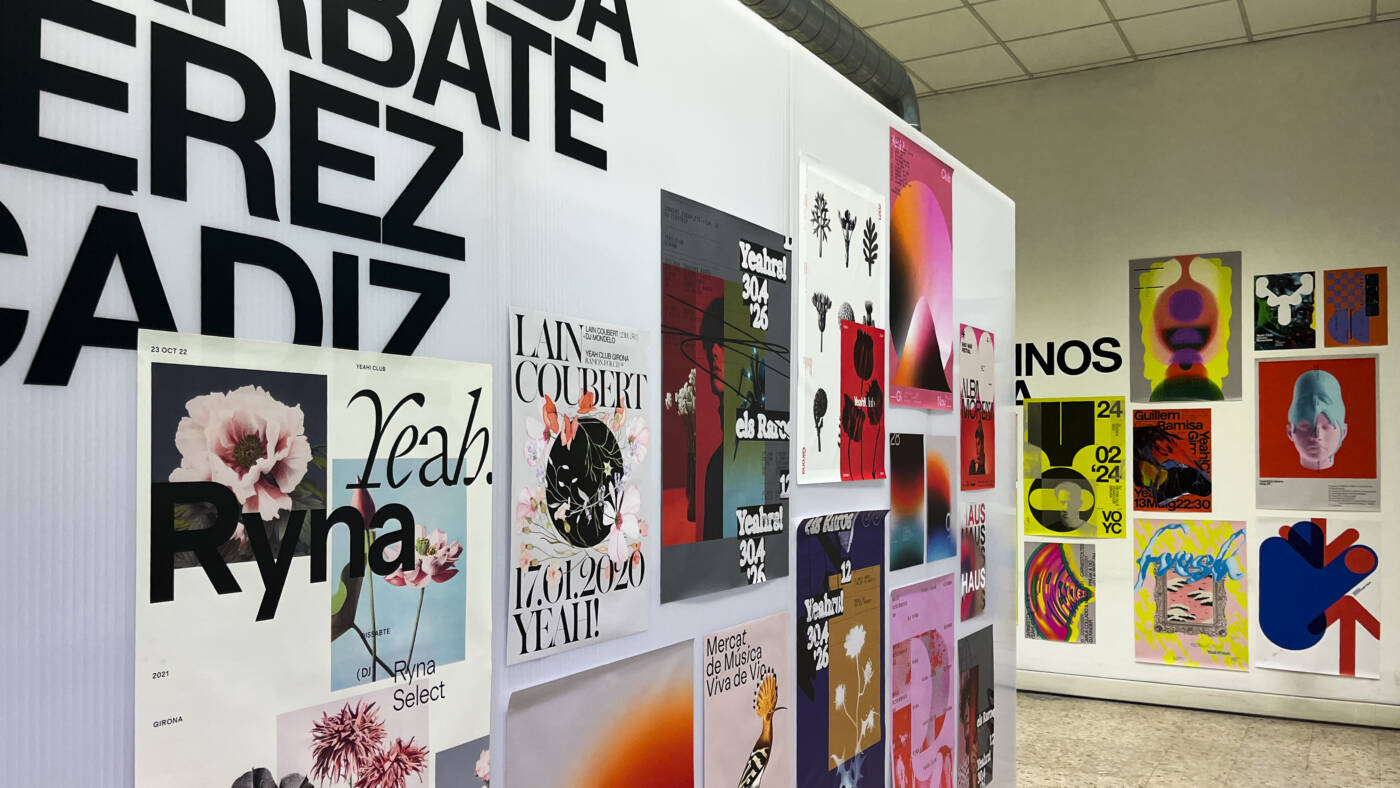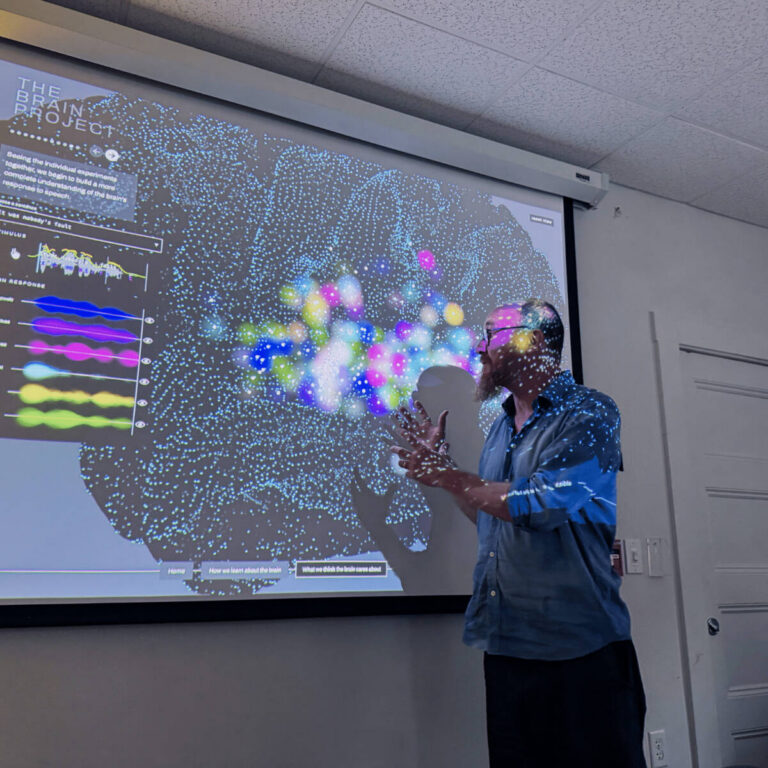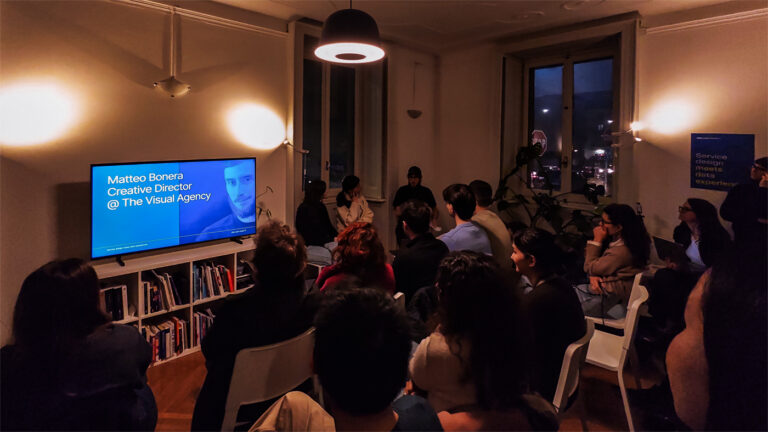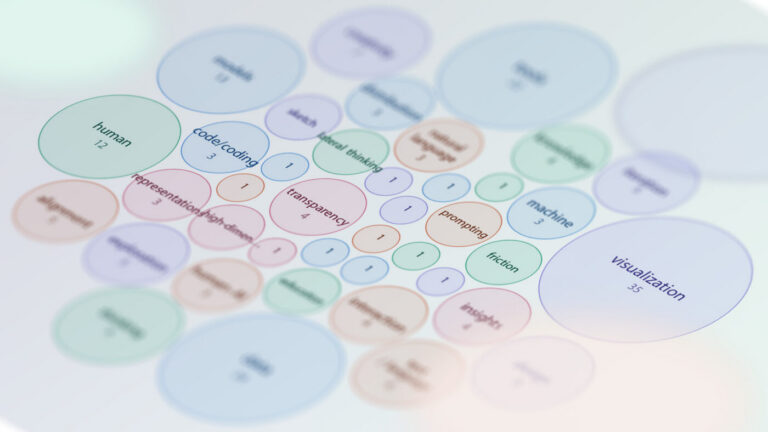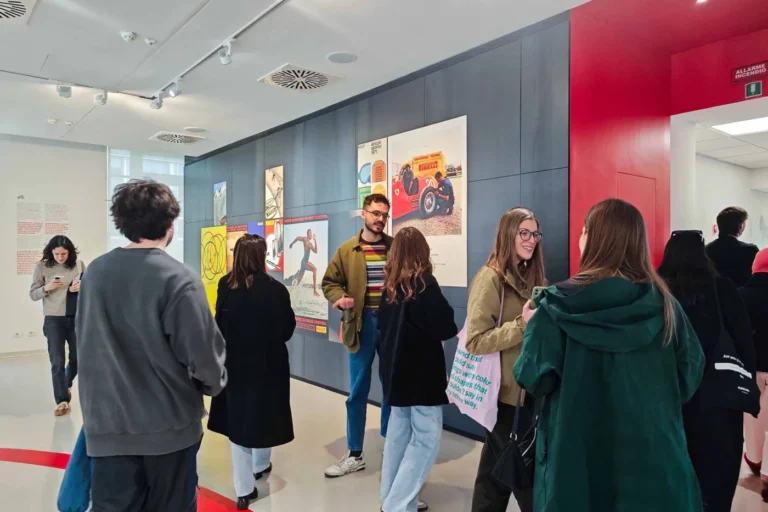
From 15 to 25 October, Turin hosted the eleventh edition of Graphic Days, the international festival dedicated to visual and social design. The Visual Agency took part too, attending exhibitions, talks and workshops.
A festival that changes venue every year
Graphic Days is a project by Print Club Torino and has taken place in the city since 2016. Each edition occupies a different space: in 2026, the festival found a home at the Gruppo Building construction sites at Via Banfo 16 and 43, in the Barriera di Milano district. The theme was Disorder, interpreted by creative directors Ilaria Reposo and Fabio Guida not as chaos, but as a generative condition capable of challenging systems and hierarchies. One of the perspectives explored was data visualization, in which visual language brings order to information while conveying emotion. This is what we do every day as information designers, and it is why we were in Turin this year.
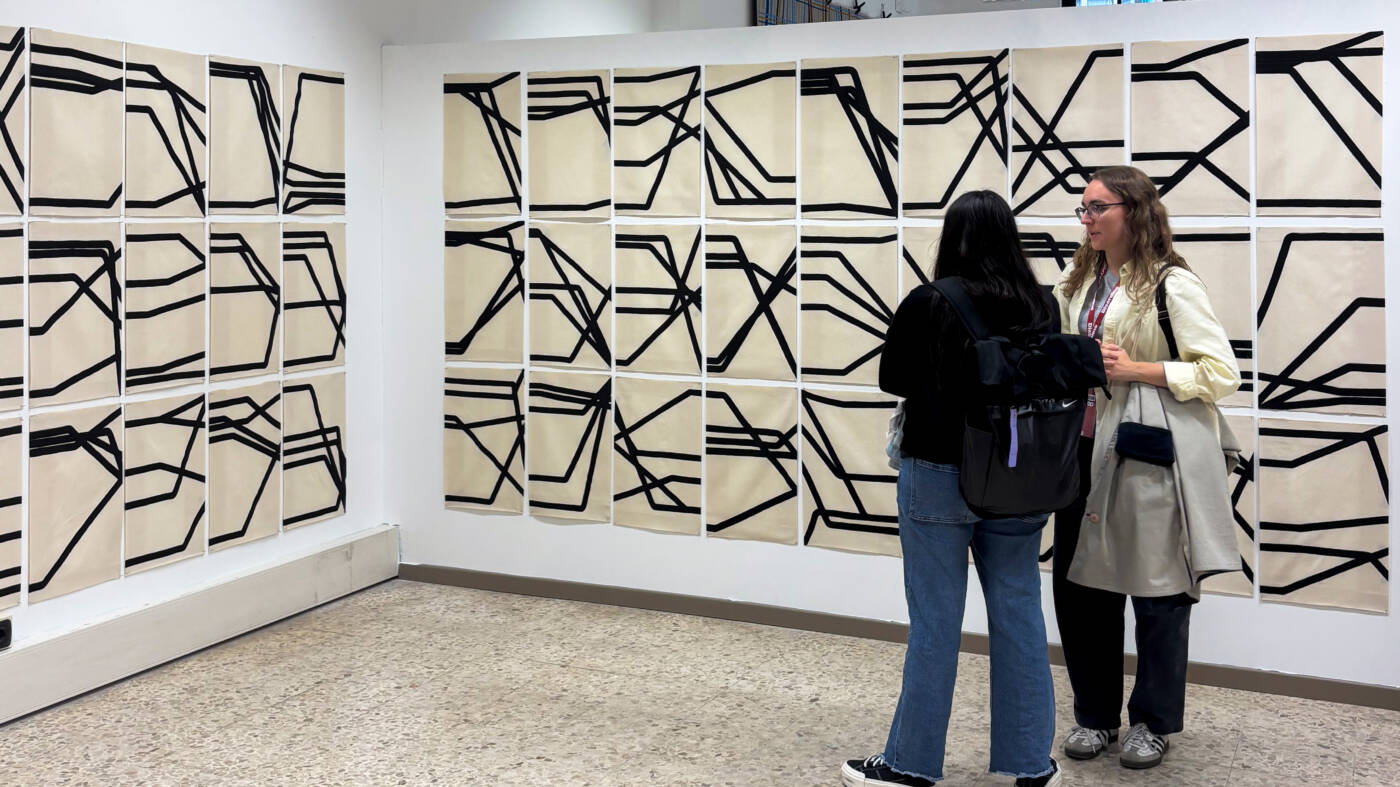
The programme brought together more than 60 international guests, including Erik Kessels, Quim Marín, Johanna Jaskowska, Felix Pfäffli and Erich Brechbühl. On 22 and 23 October, the festival moved beyond its main venue with “In the city”, a series of events held across Turin. For us, it was above all an opportunity to experience different approaches to design first-hand and compare them with the way we work with data, images and narratives.
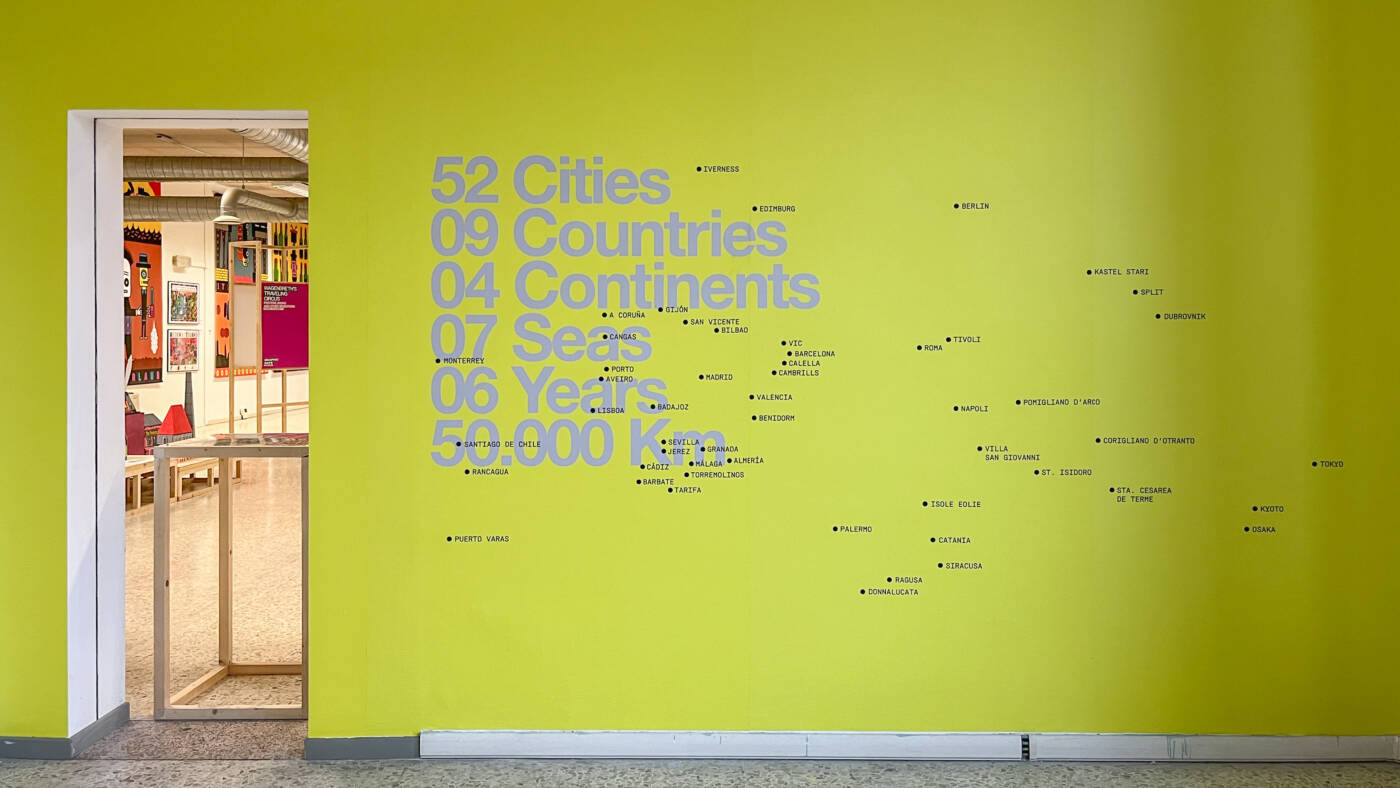
The events we followed closely
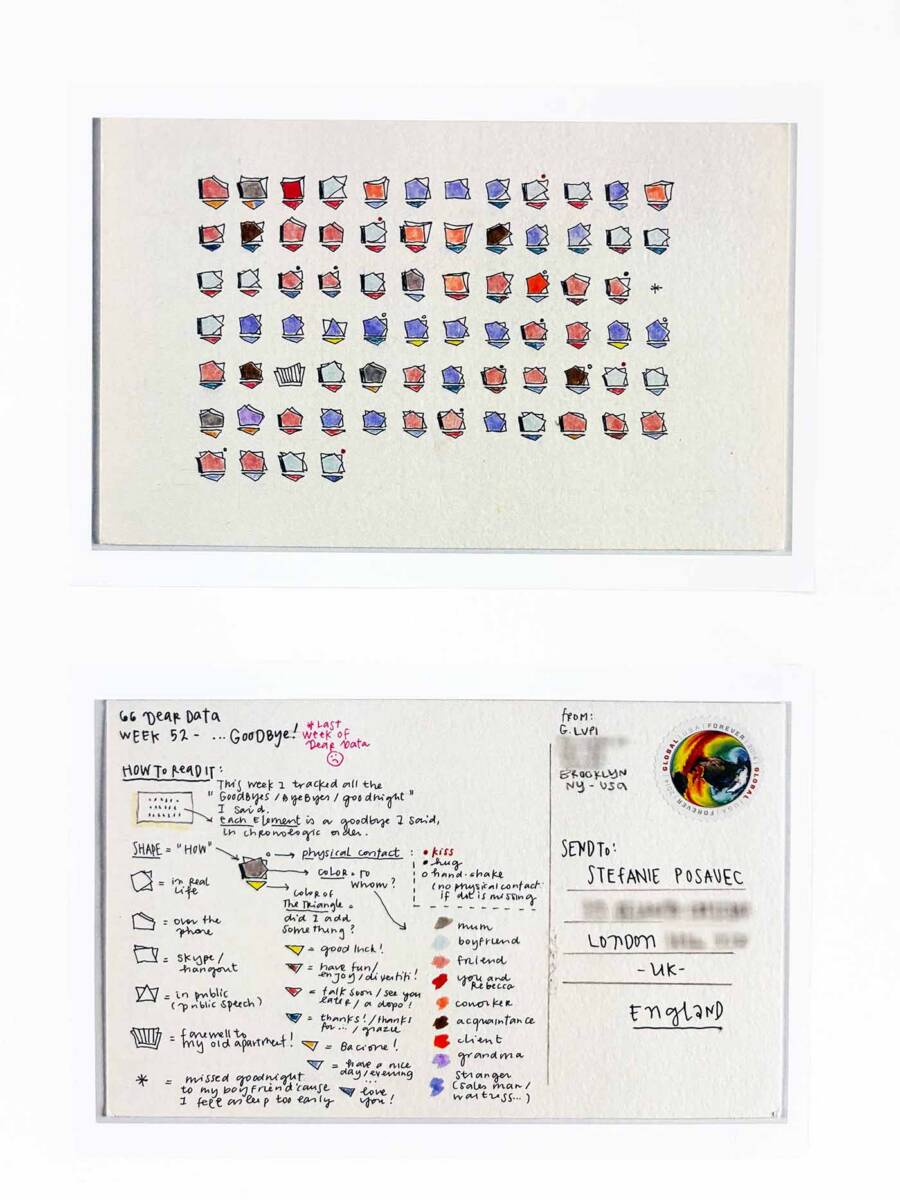
Data Humanism, Giorgia Lupi’s exhibition
Dedicated to Giorgia Lupi, information designer and partner at Pentagram in New York, the exhibition brought together research notebooks, analogue drawings and installations showing how data can give shape to memory, identity and complex social phenomena. Seeing works such as Dear Data, held in MoMA’s permanent collection, and 1,374 Days, winner of the 2025 ADI Compasso d’Oro, reminded us how central process, observation and the human element are, even in the most rigorous projects.
Don’t Forget to Breathe, with Johanna Jaskowska
The talk began with a simple and highly relatable observation: AI image generation is fast and relentless, to the point that we risk losing sight of what we were looking for. The idea resonated with us and with our ongoing reflections on the relationship between experimentation, intention and rigour in data visualization.
Data Garden, a workshop by Cristina Tarquini
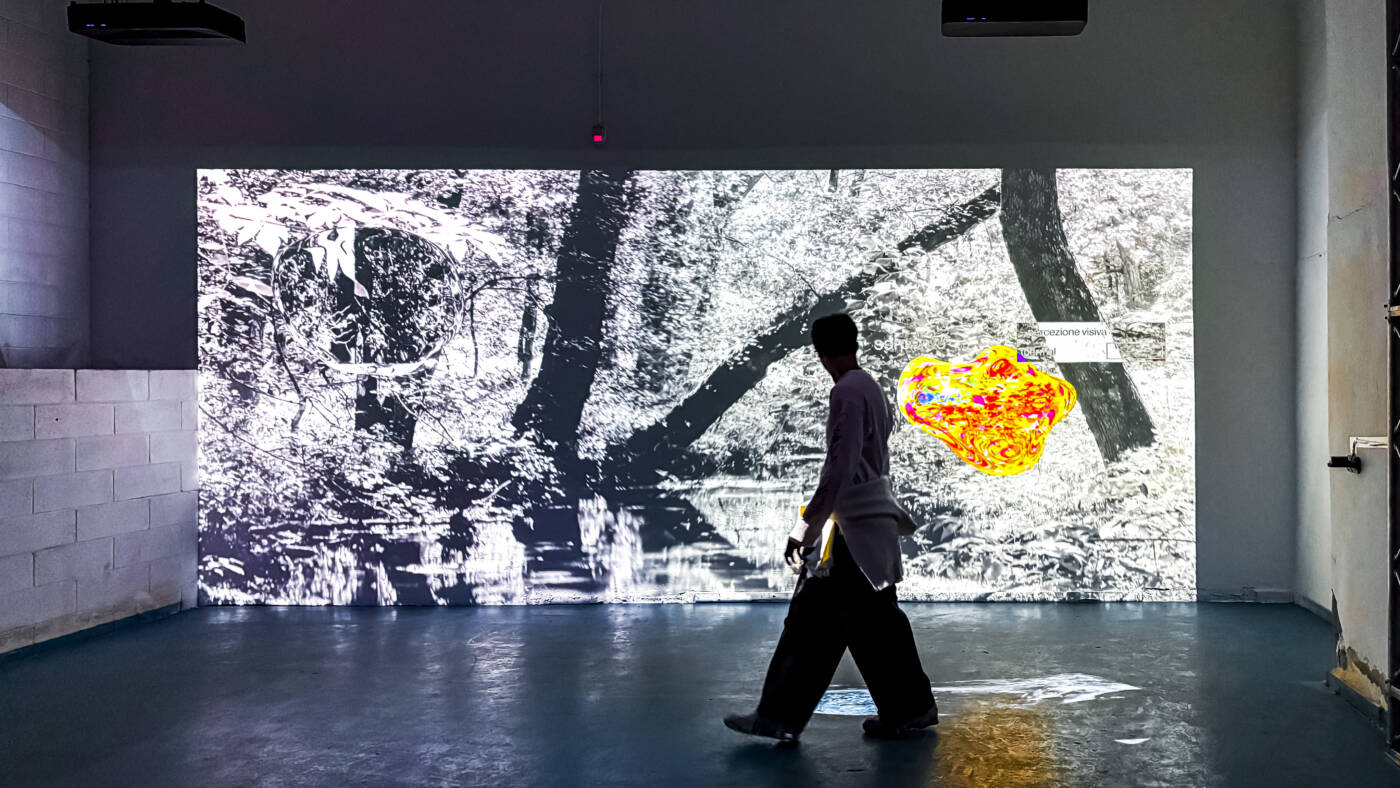
Using real data on the growth of a climbing plant, hence the workshop’s name, the four-hour session offered an introduction to creative data visualization with TouchDesigner for first-time users. We experimented with three types of effects, watching numbers and measurements turn into forms, movements and generative landscapes. Working with a concrete dataset made the experience particularly useful: a direct way to understand the tool’s logic and acquire some good practices. It was also an opportunity to discover Cristina Tarquini’s work, collected on cristinatarquini.com. On level –1, we also recommend the interactive exhibition Dentro al blu, an ode to the sea (details here).
Languages in Motion: motion design and creativity
The motion design events explored how creativity can connect with audiences across changing formats. The augmented reality exhibition brought illustrations to life through Alkanoids’ ARIA app, combining print, animation and interaction. Emanuele Colombo discussed AI, interactive products and the attention economy, while Illo showed how moments of creative freedom can lead to clearer, more expressive animation. Niceshit encouraged reclaiming time for hands-on experimentation, humour and wellbeing. Nerdo linked disorder to the studio’s origins through a personal account that prompted mixed reactions, with some of us wanting more focus on processes and projects.
What we took away
Graphic Days confirmed something for us: disorder is not the opposite of design, but often the point where design begins. Across talks, exhibitions and workshops, we encountered different ways of observing, experimenting and giving shape to information. We returned from Turin with new tools, a few more questions and a renewed desire to keep seeking a balance between rigour, technology and human sensitivity.